Advocating for a fit for purpose, future-proofed hospital, to service the people of Albury-Wodonga and surrounds.
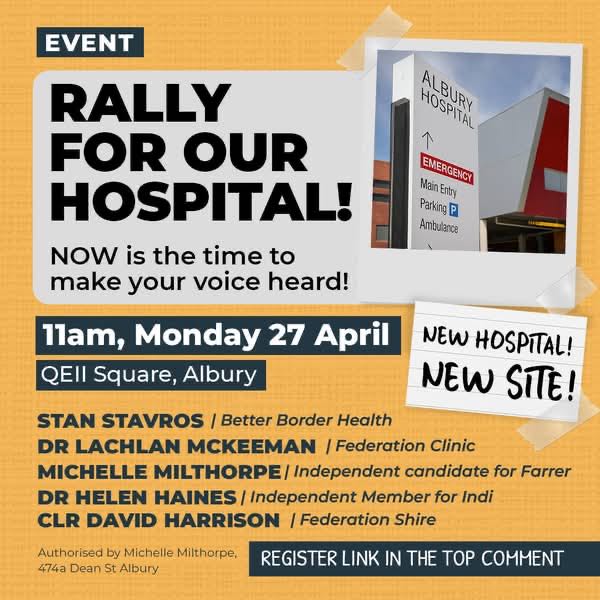
Rally for our hospital!
11am, Monday 27 April – QEII Square, Albury
Farrer byelection Q&A: where do the candidates stand on health – The Border Mail – 24 April 2026

Do you want to revisit the Better Border Health candidates’ forum on 22 April 2026?
Here is the link to the recording.
https://youtu.be/2QxP-kOUXt0?feature=shared
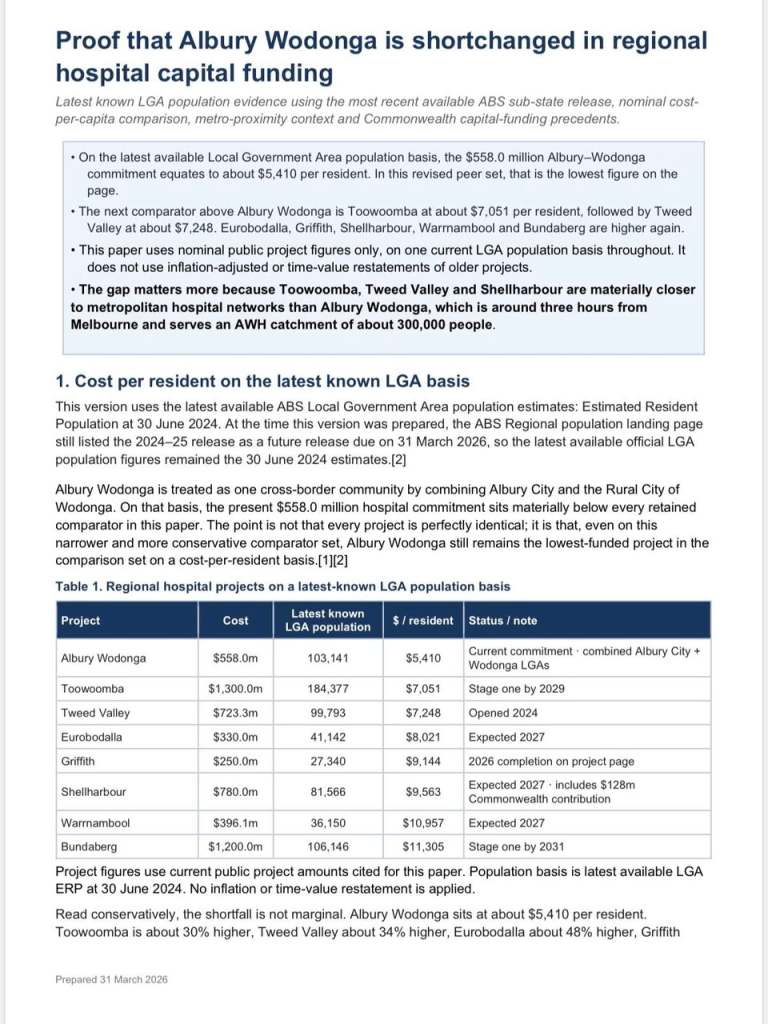
Proof that Albury Wodonga is shortchanged in regional hospital capital funding
1 April 2026
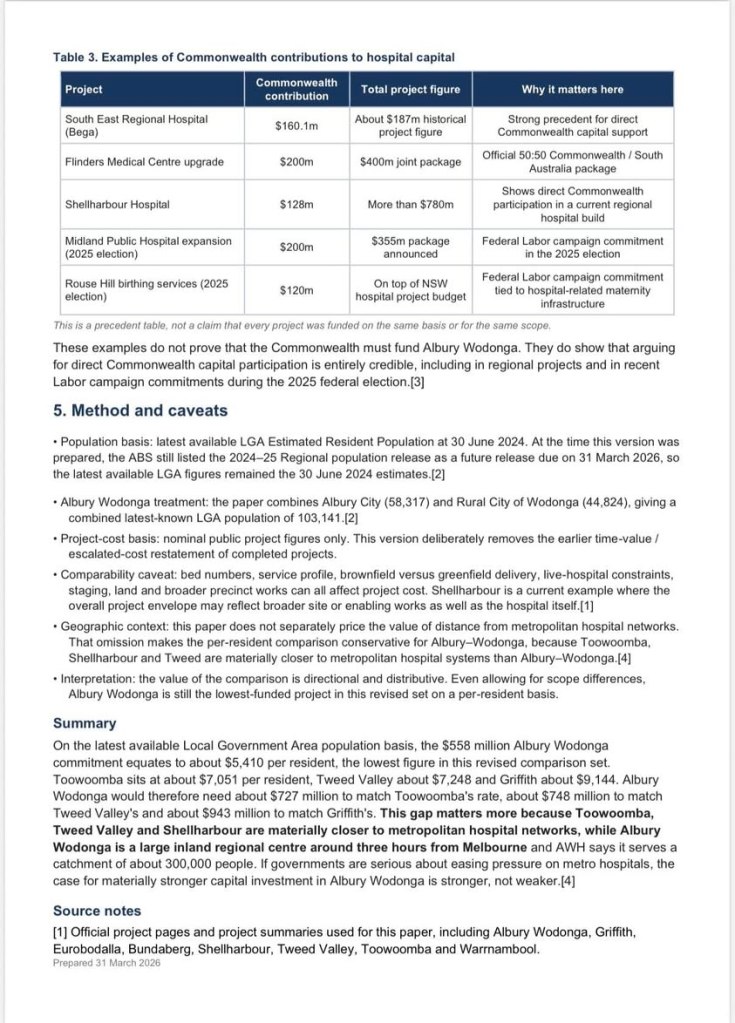
A new analysis (see following) by Better Border Health highlights a significant inequity in regional hospital capital investment affecting Albury Wodonga
Using the latest available Local Government Area population basis, our analysis shows that Albury–Wodonga’s combined hospital commitment of $558 million equates to approximately $5,410 per resident. This sits materially below a number of comparator regional hospital projects, including Toowoomba ($7,051 per resident), Tweed Valley ($7,248), Eurobodalla ($8,021), Griffith ($9,144), Shellharbour ($9,563), Warrnambool ($10,957) and Bundaberg ($11,305).
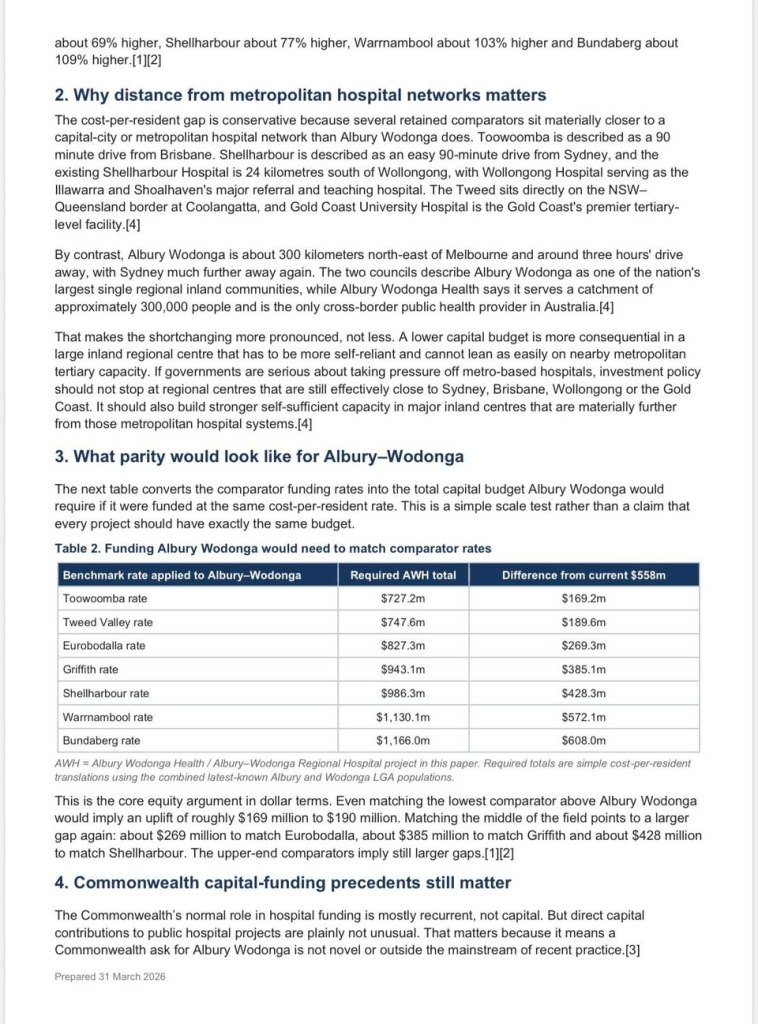
In Better Border Health’s view, this gap is even more concerning when considered in context. Several comparator centres, including Toowoomba, Tweed Valley and Shellharbour, are substantially closer to major metropolitan and tertiary hospital networks than Albury Wodonga. By contrast, Albury Wodonga is a major inland regional community that must be significantly more self-reliant while also serving a large cross-border and regional population.
This analysis therefore reinforces what our community experiences on a daily basis: the inequity is not limited to capital funding alone. It is also reflected in the broader pressures facing our health service, including recurrent funding constraints, bed shortages, the absence of 24/7 heart attack coverage, limited operating theatre capacity and insufficient dialysis chairs when compared with other regional centres.
Taken together, these issues point to a health system that is being asked to do more with less.
If governments are serious about improving regional healthcare and easing pressure on metropolitan hospitals, then investment decisions must better reflect the realities faced by large self-reliant regional centres such as Albury Wodonga.
This issue now requires strong and united advocacy. All local politicians, state and federal, on both sides of the border, should stand up for Albury Wodonga and secure the level of hospital investment this region needs and deserves.